


Early measles symptoms often resemble a respiratory infection. A person may develop fever, coughing, a runny nose and irritated, watery eyes before any rash appears. Although some people may mistake these signs for an ordinary cold, measles can cause serious complications, especially in young children and people who lack immunity. Recent outbreaks in the United States have brought renewed attention to how measles spreads, which symptoms deserve attention and how families can reduce their risk.
Why Measles Symptoms Are Getting Attention in the United States
Measles has become an important public health topic in the United States following a rise in reported cases and several large outbreaks. In October 2026, Pennsylvania reported more than 1,000 cases in its largest outbreak in over three decades, while other states have also reported outbreaks.
Measles is an infectious disease that can spread rapidly through communities where people lack protection. Vaccination has greatly reduced its occurrence in the United States, but cases can still emerge when the virus reaches communities with gaps in immunity.
Understanding the early signs matters because an infected person can spread measles before realizing what is causing the illness. Recognizing possible symptoms and contacting a healthcare professional promptly can help families get appropriate advice and reduce exposure to others.
What Are the First Measles Symptoms?
The first measles symptoms usually appear around 7–14 days after exposure to the virus. In some cases, the early illness may look similar to a common cold, which makes it important to consider the full pattern of symptoms and any possible exposure. (CDC)
Common early signs include:
– Fever that may become high
– A persistent cough
– A runny nose
– Red, watery eyes
– Feeling tired or generally unwell
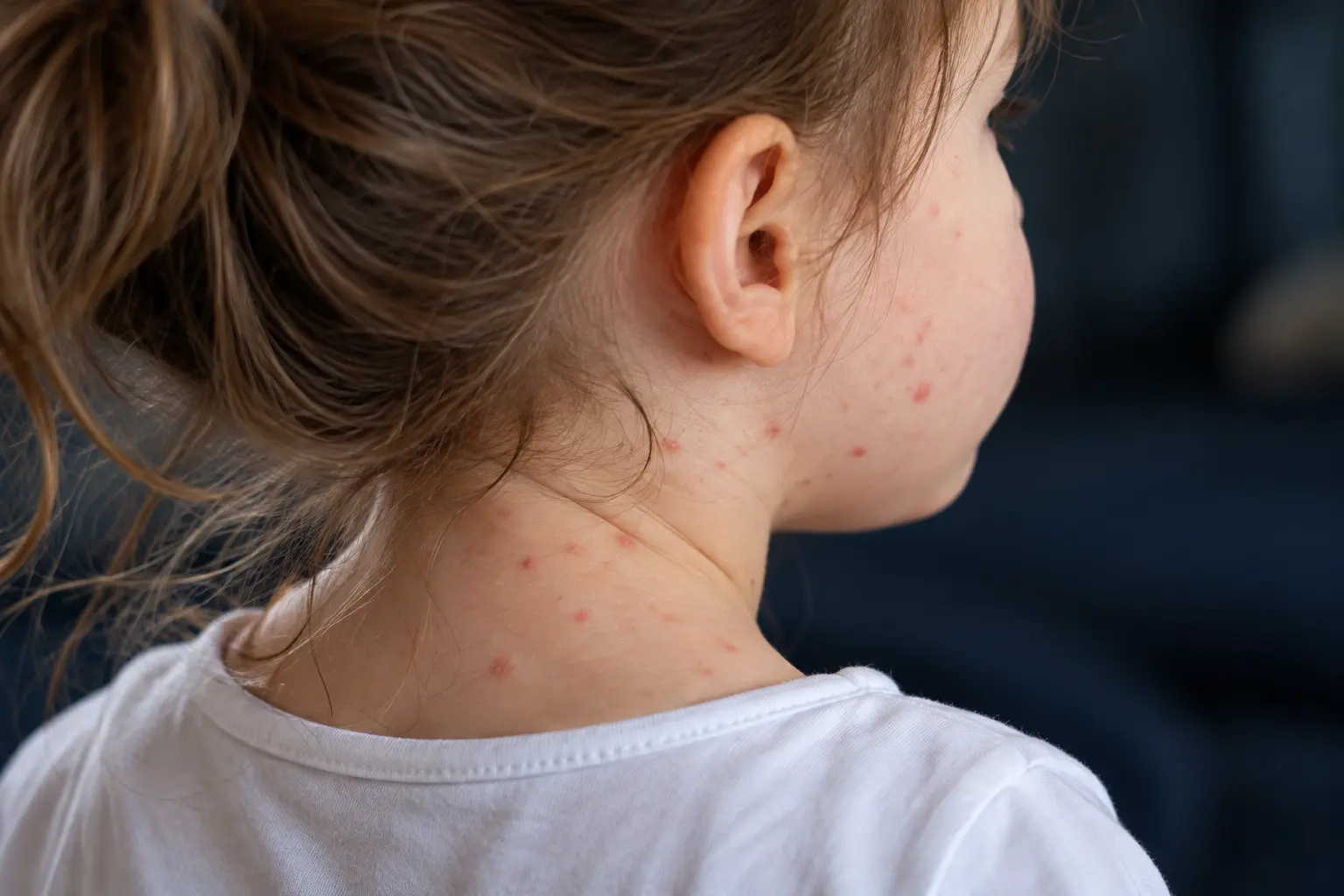
The rash usually develops several days after the initial symptoms begin. It often starts on the face or near the hairline and then spreads down the body.
Not everyone will experience every symptom in exactly the same way. However, a combination of fever, respiratory symptoms and a spreading rash should prompt medical advice, particularly if the person may have been exposed to measles.
Do not assume that a rash automatically means measles. Other illnesses can cause similar skin changes, so a healthcare professional must assess the situation.
Measles Symptoms and the Development of the Rash
The measles rash typically appears after the fever, cough, runny nose and red eyes have already started. Small red spots may first become visible on the face and then spread to the neck, trunk, arms and legs.
As the rash spreads, individual spots can join together and create larger areas of redness. The person may also continue to experience fever and feel unwell. The rash alone cannot confirm measles. Other viral infections and skin conditions can cause similar symptoms, which is why the timing of the rash and the other symptoms matter.
If you suspect measles, call a healthcare professional before visiting a clinic. The office can explain how to receive an assessment while reducing the risk of exposing other patients and staff. The CDC’s measles guidance explains what to do when symptoms appear or exposure may have occurred.
How Measles Spreads and When It Is Contagious
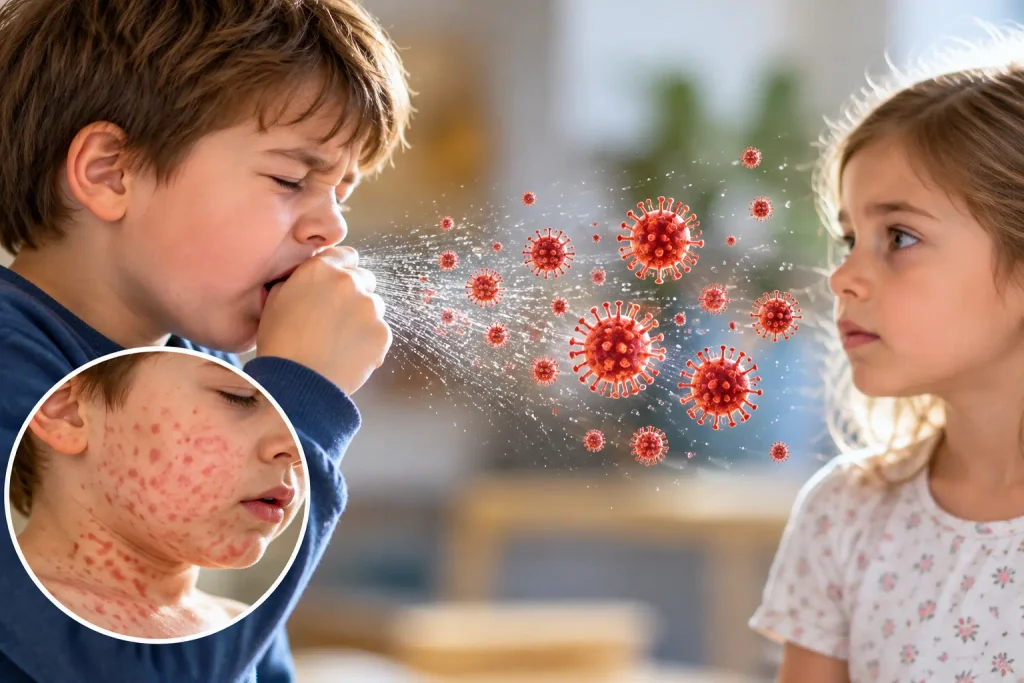
Measles spreads exceptionally easily among people who have no immunity. The CDC estimates that up to 9 out of 10 susceptible people who have close contact with an infected person may become infected. The virus spreads through the air when an infected person breathes, coughs or sneezes. It can remain infectious in the air of a space for up to two hours after the infected person has left.
People can also spread measles before the rash appears. This makes early recognition and appropriate precautions especially important.
Because transmission can occur before someone knows they are sick, simply avoiding people who already have a visible rash may not prevent every exposure. Vaccination and prompt public health guidance play important roles in controlling outbreaks.
Measles Symptoms and the Risk of Complications
Anyone without immunity can develop measles, but some groups face a greater risk of severe illness.
These include:
– Children younger than five years
– Adults older than 20 years
– Pregnant people
– People with weakened immune systems
Measles can cause ear infections and diarrhea. More serious complications include pneumonia and encephalitis, which is inflammation of the brain. In some cases, the disease can be fatal. Parents should pay particular attention when babies or young children develop a high fever alongside cough, red eyes or a spreading rash. If measles is possible, contact a healthcare professional for instructions rather than taking the child directly into a crowded waiting room.
People who are pregnant or have a weakened immune system should also seek prompt medical advice after a possible exposure, even if symptoms have not started.
How Can You Protect Your Family From Measles?
Vaccination is the most effective way to prevent measles. The measles, mumps and rubella vaccine, commonly called the MMR vaccine, provides protection against all three diseases. The CDC reports that two doses of MMR vaccine are about 97% effective at preventing measles, while one dose is about 93% effective.
The routine vaccination schedule and recommendations for people who may need an additional dose depend on age, vaccination history, health circumstances and current public health guidance. Check your vaccination records and ask a healthcare professional whether you or your children have the recommended protection.
Families can also take practical steps when an outbreak occurs:
Check announcements from reliable public health agencies.
Ask a healthcare professional about possible exposure.
Avoid unnecessary contact with others if measles is suspected.
Call ahead before attending a medical appointment.Follow advice from local health authorities about vaccination and exposure.
Everyday habits such as getting enough sleep and eating a varied diet support general health, but they cannot replace measles vaccination. Our guide to the immune system explains how everyday health habits fit into a broader approach to well-being.

What Should You Do After Possible Exposure?
If you learn that you or your child may have been exposed to measles, contact a healthcare professional promptly, even if you feel well.
The appropriate next step depends on the person’s vaccination history, age, medical circumstances and how recently the exposure occurred. In some situations, a healthcare professional may recommend vaccination or immune globulin to help prevent illness or reduce the risk of serious complications. Timing matters, so do not wait for a rash to appear before asking for advice. (CDC)
Avoid visiting a clinic without calling first. If measles is possible, the healthcare team may need to arrange a separate assessment to protect other patients.
If symptoms develop, stay away from school, work and public gatherings while following medical advice. The CDC advises people with measles to remain at home until four days after the rash begins, with the rash’s first day counted as day zero. Individual instructions from healthcare and public health professionals should take priority. (CDC)
When Should You Seek Urgent Medical Care?
Contact a healthcare professional promptly if you suspect measles, especially if there has been a known exposure or an outbreak in your community. Seek emergency medical care for serious warning signs such as difficulty breathing, signs of dehydration, confusion, reduced alertness or severe weakness. A child who struggles to feed, has very little urine output or becomes unusually difficult to wake also needs urgent assessment. Call ahead when possible and tell the medical team that measles may be involved.
Do not wait for every typical symptom to appear before seeking advice. Early medical guidance can help determine the safest next steps.
Can Measles Be Treated at Home?
There is no specific antiviral medicine routinely approved to cure measles. Medical care focuses on managing symptoms, monitoring for complications and treating problems that arise under professional guidance.
People with suspected measles should follow their healthcare professional’s advice about rest, fluids, monitoring and isolation. Do not give children medication without checking that it is suitable for their age and circumstances. Antibiotics do not treat the measles virus itself. A clinician may prescribe them only when there is a separate bacterial complication that requires treatment.
Because measles can become serious, home care should not replace medical assessment when the disease is suspected.
Frequently Asked Questions About Measles Symptoms
Can measles start like a common cold?
Yes. Early symptoms can include fever, cough, runny nose and red, watery eyes. The rash often appears several days later, so possible exposure is important to mention to a healthcare professional.
Can vaccinated people still get measles?
Measles vaccination provides strong protection, but no vaccine is perfect. Two MMR doses offer the best protection recommended for routine prevention. A healthcare professional can review your vaccination record and advise you if an exposure occurs.
How long after exposure do symptoms appear?
Symptoms commonly begin about 7–14 days after exposure, although the exact timing can vary. Contact a healthcare professional promptly if you know you have been exposed rather than waiting for symptoms.
Can someone spread measles before the rash appears?
Yes. A person with measles can spread the virus before the rash becomes visible. This is one reason why calling ahead for medical advice is important when symptoms and exposure raise concern.
Is measles dangerous for adults?
Yes. Adults can develop serious complications, and the CDC identifies adults older than 20 among the groups at greater risk of severe illness. People who are unsure of their immunity should discuss their vaccination history with a healthcare professional.
Final Thoughts
Measles is more than a rash and fever. It spreads easily, can cause serious complications and may initially resemble a common respiratory illness. Knowing the early signs, checking vaccination records and contacting a healthcare professional after possible exposure can help families make informed decisions.
The recent rise in U.S. cases makes reliable information especially useful for parents, caregivers and adults who are unsure about their immunity. For personal guidance, rely on qualified healthcare professionals and trusted public health sources such as the CDC measles information page.
Disclaimer: This article is for general educational purposes and does not replace medical advice, diagnosis or treatment. If you suspect measles or have been exposed, contact a healthcare professional before visiting a medical facility.