



Why Take the Stairs as an Everyday Habit?
Take the stairs when you have the option, and an ordinary part of your day can become an easy opportunity to move more. You do not need workout clothes, equipment or a separate exercise session. The stairs are often already part of places you visit, including your apartment building, office, shopping center or parking garage. This is what makes the habit practical. Instead of trying to create extra time for movement, you use a choice that already appears during the day. The CDC specifically identifies taking the stairs instead of an elevator as a way to add physical activity to everyday life. CDC
The idea also fits naturally with other healthy habits that turn ordinary moments into opportunities for movement.
1. Start With One Flight of Stairs
There is no reason to begin by climbing several floors. If you normally use an elevator every time, start with one flight of stairs when it feels comfortable. For example, take the stairs from the ground floor to the first floor. If that becomes an easy part of your routine, you can gradually choose the stairs for another floor. Starting small can make the habit feel less like a workout and more like a normal part of your day. WHO guidance emphasizes that some physical activity is better than none and recommends gradually increasing activity over time. Iris
You do not need to count every step or turn the activity into a daily challenge. Consistency is more useful here than trying to do too much immediately.
2. Take the Stairs During Your Workday
The workplace can provide several opportunities for short periods of movement, especially if you spend much of your day sitting. If your office is only one or two floors away, consider using the stairs when you arrive. You might also use them when going to another department, leaving for lunch or returning from a break. The CDC includes taking the stairs among practical ways to add activity during a workday. CDC This can complement other work and wellness habits, particularly for people who spend many hours at a desk.
You do not have to avoid elevators completely. The goal is simply to recognize situations where the stairs are a reasonable alternative.
3. Connect the Habit to a Regular Moment
Habits can be easier to remember when they are connected to something that already happens consistently. You could decide to use the stairs when you arrive at work each morning. Another option is taking them after lunch, when leaving your apartment or when returning from a coffee break.
The trigger can be simple: when you see the elevator and the stairs are practical, choose the stairs.
This removes some of the decision-making. Instead of asking yourself every time whether you should be more active, the choice gradually becomes part of your normal routine.
4. Take the Stairs Without Rushing
There is no need to race upward. Walk at a pace that feels manageable, use the handrail when needed and pay attention to the steps. Your breathing may become faster as you climb, particularly if you are not accustomed to stairs. CDC information on physical activity notes that even smaller periods of movement count, including a few minutes spent climbing stairs.
If you are trying to become more active generally, stair climbing can sit alongside activities such as walking and beginner exercise and fitness rather than replacing them.
5. Look for Small Opportunities During the Day

The stairs at home or work are not the only option. You may encounter them in train stations, hotels, airports, public buildings and parking garages. When the distance is short and the stairway is safe and accessible, consider whether you actually need the elevator or escalator. These small choices can accumulate naturally because they are attached to places you already visit.
WHO explains that physical activity includes many forms of movement, including walking, cycling, household activity and taking the stairs. World Health Organization In other words, movement does not have to happen only during a planned workout.
Take the Stairs to Break Up a Sedentary Day
People who work at computers can remain seated for long periods without noticing how much time has passed. A trip between floors can provide a natural reason to get out of the chair. If you need to speak with a colleague upstairs, for example, walking there and using the stairs adds movement to a task you already needed to complete. WHO recommends limiting sedentary time and notes that replacing sedentary time with physical activity of any intensity provides health benefits. Iris This does not mean that a few flights of stairs cancel out an otherwise inactive lifestyle. Instead, they can become one part of a day that includes regular movement, appropriate exercise and breaks from prolonged sitting.
6. Make the Habit Flexible
A useful daily habit should adapt to real life. Some days you may take the stairs several times. On another day, you might be tired, carrying heavy bags or simply need the elevator. That does not mean the habit has failed. Avoid creating an unnecessary rule that you must always choose stairs regardless of the situation. Instead, think of the habit as a preference: when taking the stairs is practical and comfortable, choose them more often.
This flexible approach can make the behavior easier to maintain over time.
When Taking the Stairs May Not Be Appropriate
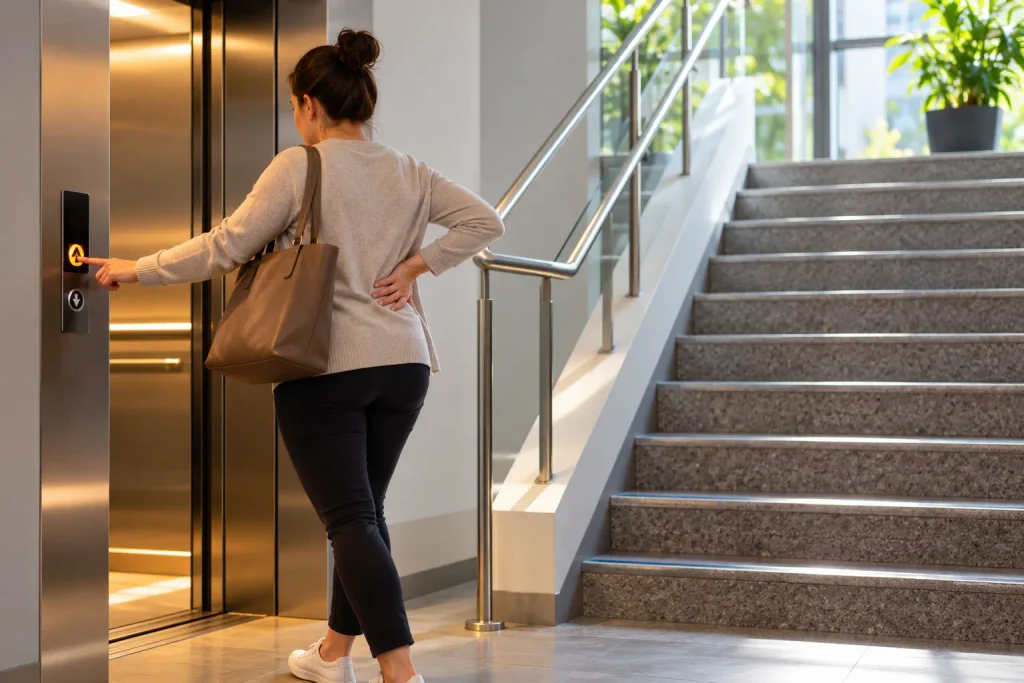
Stairs are not suitable for everyone or in every situation. Use the elevator when you are carrying something that affects your balance, when the stairway is poorly lit or slippery, or when climbing would not be appropriate for your mobility or health. People with certain health conditions may need individual guidance about appropriate physical activity. The CDC advises people with chronic conditions to discuss suitable types and amounts of activity with a healthcare professional when needed.
Safety should always be more important than completing a habit.
Take the Stairs as Part of a More Active Routine
Stair climbing works best as one small component of a generally active lifestyle. You can combine it with walking, regular breaks from sitting and planned physical activity. A short walk after dinner, for example, provides another straightforward opportunity to move without making your routine complicated. Regular physical activity has both immediate and long-term health benefits. According to the CDC, it can support sleep, reduce feelings of anxiety and contribute to cardiovascular, metabolic, bone and brain health.
WHO recommends that adults generally aim for 150–300 minutes of moderate-intensity aerobic activity each week, while emphasizing that all physical activity counts. World Health Organization Taking the stairs alone should not be viewed as a substitute for these broader recommendations. It is simply one accessible way to put more movement into an ordinary day.
Frequently Asked Questions About Taking the Stairs
Do I Need to Take the Stairs Every Time?
No. Use them when the choice is comfortable, safe and practical. An everyday habit does not need to become an inflexible rule.
Does One Flight of Stairs Count as Activity?
Yes. The CDC notes that even a few minutes of physical activity can contribute to your overall movement, including time spent climbing stairs. CDC
Should I Climb the Stairs Quickly?
Not necessarily. A comfortable pace is perfectly reasonable. There is no need to turn every trip upstairs into an intense workout.
Can I Take the Elevator Down and Use the Stairs Up?
Yes. You can adapt the habit to your circumstances. What matters is finding a realistic way to include additional movement when it suits you.
What if I Work on a High Floor?
You do not need to climb the entire building. You might use the stairs for one or two floors and take the elevator for the remaining distance.
Final Thoughts
Choosing to take the stairs is a small decision, but that simplicity is exactly what can make it useful as a healthy habit. It requires no equipment, membership or special preparation and can fit naturally into places you already visit.
Begin with one manageable opportunity rather than trying to change every elevator trip immediately. Over time, reaching for the stairs when they are practical can become an ordinary part of a more active day.
Disclaimer: This article provides general educational information and is not a substitute for individualized medical advice. Choose physical activities that are appropriate for your health, mobility and fitness level.