


Why Deep Breathing Can Be Useful During a Busy Day
Deep breathing is a simple technique that can be practiced almost anywhere without special equipment.
When people experience stress, breathing can become faster and shallower. Relaxation techniques that include slow breathing are used to encourage the body’s relaxation response. Research reviewed by the National Center for Complementary and Integrative Health suggests that slow, deep breathing may help reduce stress in some people. (NCCIH)
The goal is not to eliminate every stressful moment. Instead, this technique can give you a short pause before continuing with your day.
1. Finding a Comfortable Position
A quiet corner of your home can be enough for this exercise.
Sit comfortably in a chair, place both feet on the floor and allow your shoulders to relax. You can also practice while standing if sitting is not convenient.
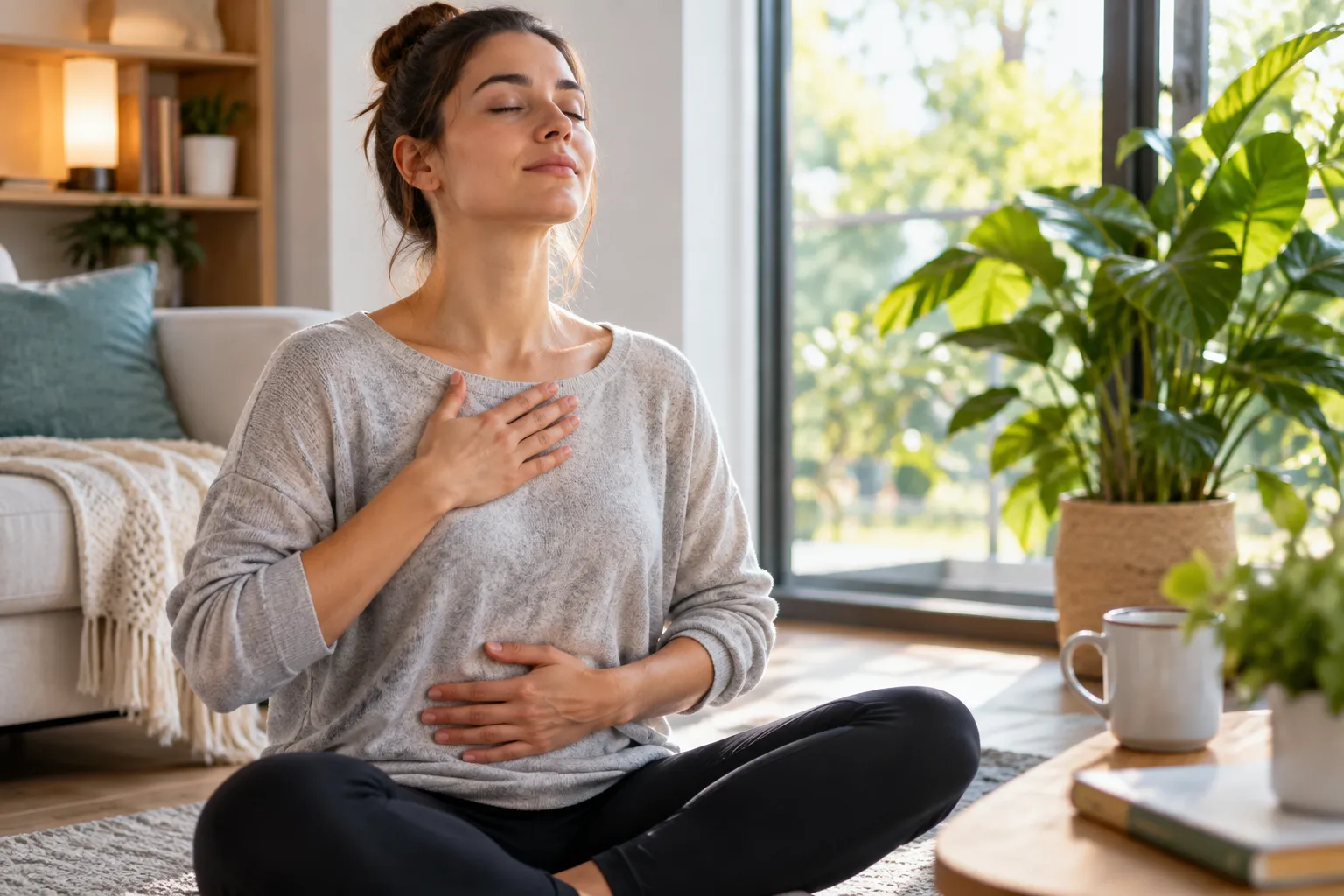
Place one hand over your abdomen if that helps you notice your breathing more easily.
Then take a slow breath in and allow your abdomen to move naturally. Breathe out slowly without forcing the air.
The movement should feel comfortable rather than strained.
2. Deep Breathing Can Take Only a Few Minutes
A short practice can be easier to maintain than a long session.
Try this simple sequence:
– sit comfortably
– relax your shoulders
– breathe in slowly
– allow your abdomen to expand naturally
– breathe out slowly
– pause briefly
– repeat at a comfortable pace
There is no requirement to keep track of every breath. Instead, focus on making your breathing slower and bringing your attention back whenever your mind wanders.
WHO materials also describe slow breathing as a practical stress-management technique. (WHO)
3. Using Slow Breaths During Everyday Activities
You do not have to wait until you feel extremely stressed before using a breathing exercise.
Try it during an ordinary transition in your day.
For example, take a few slow breaths:
– before starting work
– after finishing a difficult task
– while waiting for an appointment
– before an important conversation
– after returning home
– before beginning your evening routine
This makes the technique easier to connect with an existing habit.
You can also combine it with other calming habits from our self-care content.
4. Deep Breathing Is Not a Cure for Anxiety
Breathing exercises can be useful as one coping technique, but they should not be presented as a treatment for an anxiety disorder or another mental health condition.
NCCIH notes that relaxation techniques may help with stress and some anxiety-related situations, while evidence varies depending on the condition and technique. (NCCIH)
If worry, fear or low mood continues to interfere with everyday activities, professional support may be appropriate. NIMH recommends seeking help when symptoms persist, worsen or make normal activities difficult. (NIMH)
5. Deep Breathing Works Best Without Pressure

There is no need to make every breathing session perfect.
If your attention wanders, simply return your focus to your next breath. You can keep your eyes open or close them if that feels comfortable.
Some people may feel uncomfortable or more anxious during relaxation exercises. NCCIH notes that although these techniques are generally considered safe for healthy people, unpleasant reactions can occasionally occur. (NCCIH)
If an exercise makes you feel worse, stop and choose another way to relax.
A Simple Breathing Break at Work
A busy workday can make it difficult to take a long break.
Instead, create a short pause between two activities.
Finish one task, put your hands away from the keyboard and take several comfortable, slower breaths. Then return to your next task.
This small pause can also work well with other habits such as standing up, drinking water or taking a short walk.
For more ideas, see our work & wellness guide.
Deep Breathing Before Bed
A few slow breaths can also become part of an evening wind-down routine.
Turn down distractions, sit or lie comfortably and focus on breathing for a few minutes.
Rather than trying to make sleep happen immediately, use these few minutes as a quiet transition between your daytime activities and bedtime.
A consistent sleep routine remains important, so breathing should be considered one small part of your evening habits rather than a replacement for good sleep practices. NIMH recommends maintaining a regular sleep schedule and making sleep a priority. (NIMH)
You can find more ideas in our sleep and recovery content.
Frequently Asked Questions About Deep Breathing
How long should I practice deep breathing?
There is no single required duration. A short period that feels comfortable can be easier to maintain regularly than a long session.
Should I breathe as deeply as possible?
No. The breathing should remain comfortable and controlled. Forcing very large breaths is unnecessary.
Can I practice deep breathing at work?
Yes. You can practice while sitting at your desk, during a short break or between activities.
Can deep breathing replace professional treatment?
No. Breathing exercises can be a self-care technique, but they should not replace professional assessment or treatment when someone is experiencing persistent or severe symptoms.
Final Thoughts on Deep Breathing
Deep breathing is a simple technique that can fit into ordinary parts of the day.
Start with a comfortable position, slow your breathing and give yourself a short pause without trying to make the exercise perfect.
Used alongside healthy sleep habits, physical activity, supportive relationships and other forms of self-care, it can become one practical way to create more moments of calm during a busy routine.
Disclaimer: The information in this article is intended for general education and awareness. It is not a replacement for professional mental health or medical guidance, diagnosis or treatment. If stress, anxiety or other emotional symptoms persist or interfere with your daily life, speak with a qualified healthcare professional.