


Why Make a Chickpea Quinoa Salad?
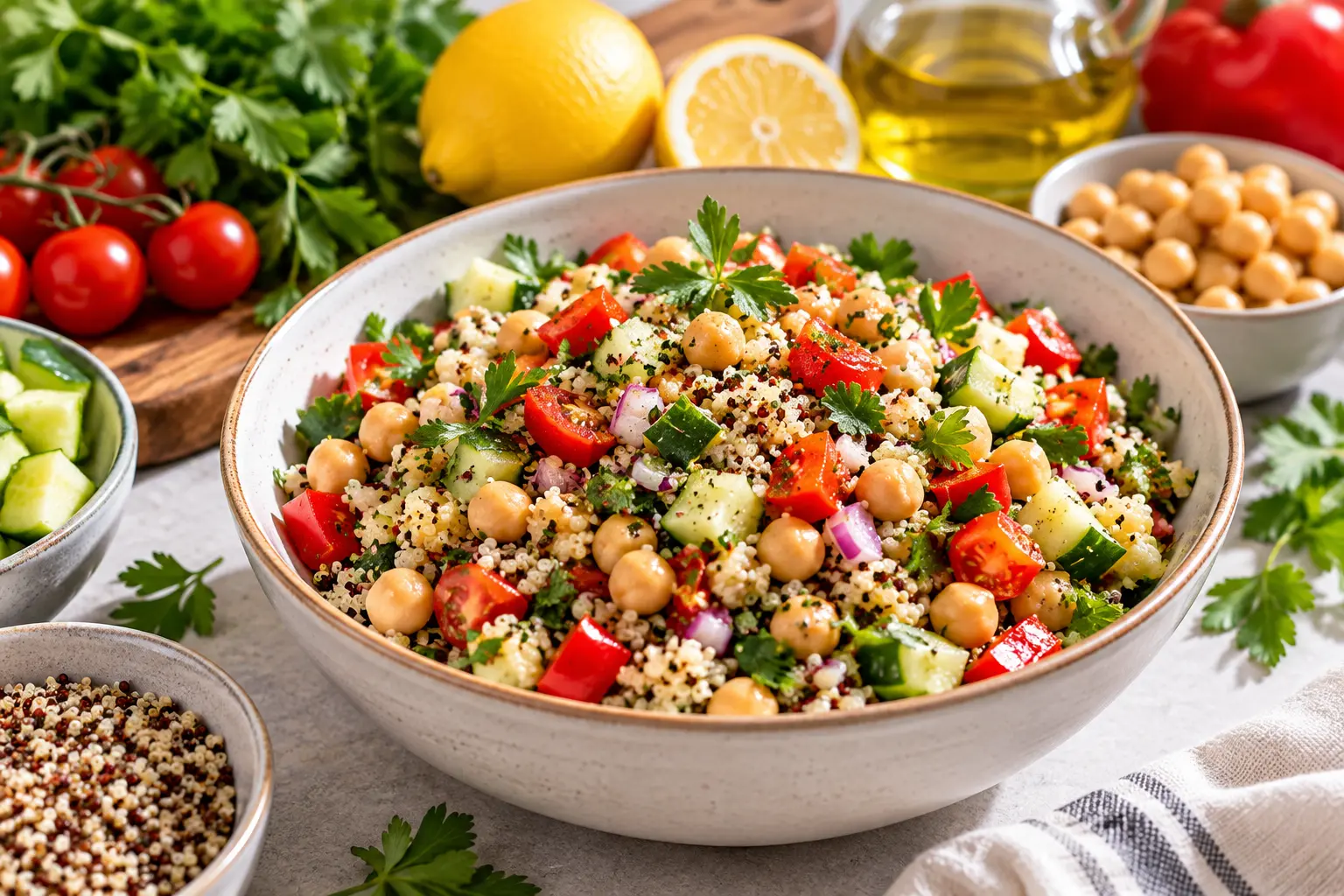
A chickpea quinoa salad is an easy lunch option when you want something filling without spending a long time in the kitchen. It combines cooked quinoa, chickpeas, fresh vegetables, herbs and a simple lemon dressing in one bowl.
This salad can also be prepared in advance, making it a practical option for busy days. Cook the quinoa ahead of time, refrigerate it and combine the ingredients when you are ready to eat.
Chickpeas provide plant-based protein and fiber, while quinoa adds carbohydrates and some protein. The fresh vegetables add different textures, colors and nutrients, bringing all the ingredients together in a simple meal that fits easily into a varied diet.
If you enjoy Mediterranean-style meals, this recipe can also complement our Mediterranean chicken bowl, which uses a different combination of vegetables, grains and protein.
Ingredients You Will Need
For approximately four servings, prepare:
-1 cup cooked quinoa
-1 can chickpeas, drained and rinsed
-1 large cucumber, diced
-2 medium tomatoes, chopped
-1 red bell pepper, diced
-¼ small red onion, finely chopped
-A handful of fresh parsley
-A few fresh mint leaves, if desired
-2 tablespoons extra-virgin olive oil
-Juice of 1 lemon
-1 small garlic clove, finely minced
-½ teaspoon dried oregano
-Black pepper to taste
-A pinch of salt, adjusted to taste
The ingredient amounts can easily be changed according to the number of servings you need. You can also replace some vegetables with what you already have, such as cherry tomatoes or extra leafy greens.
There is no single required vegetable combination for this salad. Keep the quinoa and chickpeas as the base, then choose fresh produce and a dressing that work well together.
How to Prepare the Quinoa
Cook the quinoa following the preparation directions provided on the package. Once it has finished cooking, allow it to cool before assembling the salad.
Cooling the quinoa is useful because very hot grains can soften the vegetables and make the finished dish less crisp. Spread the cooked quinoa into a shallow bowl or plate if you want it to cool more quickly.
While the quinoa cools, prepare the remaining ingredients. Drain and rinse the chickpeas thoroughly. Dice the cucumber and bell pepper, chop the tomatoes and finely slice the red onion.
Fresh herbs are worth adding because they bring a lot of flavor without requiring a heavy dressing. Parsley works particularly well, while a small amount of mint can give the salad a fresher taste.
Preparing the Lemon Dressing
The dressing is deliberately simple.
Combine the olive oil, lemon juice, minced garlic, oregano and black pepper in a small bowl, then whisk until the mixture looks evenly blended.
Give the dressing a quick taste before mixing it with the salad. For a brighter flavor, increase the lemon slightly; if the citrus tastes too strong, balance it with a little more olive oil.
A light dressing is all this salad needs because the chickpeas, vegetables and fresh herbs already bring plenty of flavor to the bowl.
How to Assemble the Chickpea Quinoa Salad
Place the cooled quinoa in a large mixing bowl. Add the rinsed chickpeas, cucumber, tomatoes, red pepper and red onion.
Scatter the parsley and mint over the mixture, then add most of the dressing and fold the ingredients together gently. Try not to crush the tomatoes or vegetables while stirring. A large spoon or salad server works well because it allows you to combine the ingredients without pressing them too hard. Taste the salad after mixing and add a little more dressing only if you think it needs it.
For added crunch, try a small sprinkling of pumpkin seeds or chopped walnuts. They are optional, but they can give the finished salad a more interesting texture.
Why Chickpea Quinoa Salad Makes a Balanced Lunch
A useful everyday meal usually benefits from having several types of food rather than relying heavily on one ingredient. In this recipe, quinoa and chickpeas provide the main base. Chickpeas contribute plant protein and fiber, while quinoa provides carbohydrates and additional nutrients. Vegetables add freshness, volume and a range of vitamins and minerals. The olive oil-based dressing contributes fat and helps bring the ingredients together. Because the recipe contains several different food groups, it can be more satisfying than a bowl made mainly from raw vegetables. If you are interested in building more balanced plant-based meals, our plant-based nutrition guide has more ideas for combining legumes, whole grains, vegetables and healthy fats. A smaller serving can also be paired with another dish when you want a more varied meal. Grilled chicken or fish, for example, can be served alongside the salad.
Easy Ingredient Swaps
One of the useful things about this type of salad is that you can adapt it to the ingredients already available in your kitchen. When you do not have quinoa, try cooked brown rice or another whole grain as the base. The flavor and texture will vary, but the rest of the recipe can remain the same.
Instead of cucumber, try zucchini or additional bell pepper. Cherry tomatoes can replace chopped tomatoes, while spring onions can be used instead of red onion if you prefer a milder flavor. For herbs, parsley is the easiest option, but coriander or fresh basil can also change the character of the dish.
If you want more protein, add a boiled egg, grilled chicken or a small amount of feta cheese. For a completely plant-based version, keep the chickpeas as the main protein source and add seeds or nuts if desired. These substitutions mean you can prepare the recipe several times without having exactly the same meal every time.
How to Make It More Filling
Some people may want a larger or more substantial lunch, especially on days when they are more active. One option is to increase the amount of chickpeas or quinoa slightly. Another is to add avocado, pumpkin seeds or walnuts for additional texture and energy.
You can also serve the salad with a piece of whole-grain bread. If you already follow an active routine, meals like this can fit naturally alongside regular exercise and fitness. The goal is not to create a perfect meal every time, but to build a varied eating pattern that works with your daily routine.
Preparing the Salad Ahead of Time
This recipe is particularly convenient for lunch preparation. Cook the quinoa and allow it to cool completely. Prepare the vegetables and chickpeas separately if you want the salad to stay especially crisp. For the best texture, you can keep the dressing in a small separate container and mix it into the salad shortly before eating. This prevents the vegetables from sitting in the dressing for too long. Store prepared ingredients in clean, covered containers in the refrigerator and follow normal food-safety practices for cooked foods and leftovers.
If you are preparing several portions, divide the salad into individual containers. That makes it easier to take lunch to work or have a ready-made meal available during a busy day.
Simple Ways to Change the Flavor
The basic recipe has a fresh Mediterranean-style flavor, but small additions can create a different version. For a stronger lemon flavor, add some finely grated lemon zest to the dressing. A pinch of chili flakes can provide mild heat, while smoked paprika can give the chickpeas a deeper flavor. You can also add olives for a salty Mediterranean note or a few crumbled pieces of feta cheese for a creamy contrast.
If you prefer a sweeter balance, a small amount of chopped roasted red pepper can work well with the lemon dressing. These additions are optional. Start with the basic recipe and adjust the flavor gradually rather than adding many ingredients at once.
Common Mistakes to Avoid

One common problem is adding the dressing while the quinoa is still very hot. This can make the vegetables softer than intended and may change the texture of the salad. Another issue is using too much dressing. Lemon and olive oil can quickly dominate the flavor, so it is better to add a smaller amount first and increase it after tasting. Do not skip rinsing canned chickpeas. Rinsing removes the liquid from the can and gives them a cleaner taste.
Finally, avoid cutting all the vegetables into extremely small pieces. Medium-sized pieces provide a better contrast with the quinoa and chickpeas and make the salad more enjoyable to eat.
Chickpea Quinoa Salad for Different Meals
Although this recipe works especially well for lunch, it does not have to stay there. A smaller serving can work as a side dish at dinner. You can also serve it with grilled fish, chicken or roasted vegetables when you want a more substantial meal. For a light summer meal, serve it chilled with extra cucumber, tomatoes and herbs. During cooler months, you can serve it closer to room temperature and add roasted vegetables. This flexibility is one of the reasons simple recipes are useful. You can adapt the same basic preparation to different meals instead of needing a completely different recipe every day.
Frequently Asked Questions About Chickpea Quinoa Salad
Can I make this recipe without quinoa?
Yes. Brown rice, bulgur or another cooked whole grain can be used instead. The texture and flavor will change slightly, but the basic salad concept remains the same.
Can I use canned chickpeas?
Yes. Canned chickpeas are convenient for this recipe. Drain and rinse them before adding them to the salad.
How long can I keep the salad?
Keep prepared salad refrigerated in a covered container and follow standard food-safety guidance for leftovers. If possible, store the dressing separately to maintain the best texture.
Can I make it completely plant-based?
Yes. The basic recipe is already plant-based as written. If you add feta, egg or another animal-based ingredient, it will no longer be fully plant-based.
Can I add chicken?
Absolutely. Grilled chicken can be added if you want a higher-protein version. It also creates a useful connection with other balanced meals such as our Mediterranean chicken bowl.
Final Thoughts
A chickpea quinoa salad is a practical recipe for anyone looking for a fresh, filling lunch that does not require complicated cooking. Quinoa, chickpeas, vegetables, herbs and a simple lemon dressing create a flexible base that can be changed according to your preferences.
You can prepare several portions in advance, adjust the vegetables and add different toppings when you want more variety. Most importantly, the recipe shows that a balanced meal does not have to involve a long ingredient list or complicated preparation.
Disclaimer: This article provides general food and nutrition information for educational purposes. Individual nutritional needs can vary depending on age, health, activity level and dietary requirements.