



Packaged snack foods can save time when you need something quick, but some products provide a lot of sugar, sodium or saturated fat in a small serving. Knowing how to compare them can make everyday choices easier.
You do not have to remove every packaged product from your diet. Instead, consider how frequently you eat certain foods and how they fit into the rest of your meals. WHO describes a healthy diet through principles such as balance, moderation, adequacy and variety. WHO healthy diet guidance
Why Packaged Snack Foods Deserve a Closer Look
A small snack can sometimes contain more sugar, salt or saturated fat than you might expect. The amount depends on the product and the serving size.
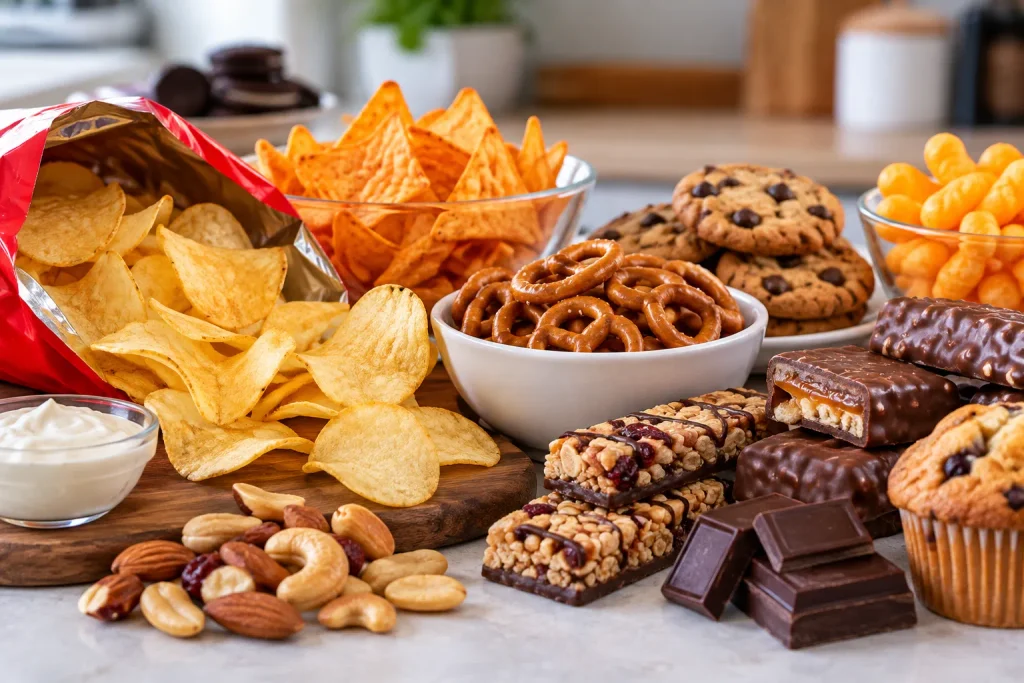
Common examples include chips, cookies, sweetened bars, flavored crackers and some pastries. However, products within the same category can have very different nutritional profiles.
Rather than judging a product by its packaging, take a few seconds to check the nutrition information.
1. Packaged Snack Foods Can Be High in Added Sugar
Sweet snacks are one area where added sugar can become easy to overlook.
Cookies, sweet bars, chocolate-coated snacks and some flavored products may contain considerable amounts of sugar. WHO recommends limiting free sugars as part of a healthy dietary pattern. WHO guidance on healthy diet
When comparing two similar products, look at the sugar amount rather than relying on descriptions such as “natural,” “light” or “with fruit.”
Fresh fruit can also provide a naturally sweet option while adding fiber and other nutrients.
2. Check the Sodium in Savory Snacks
Salt can be easy to consume in larger amounts when savory snacks are eaten regularly.
Chips, salted crackers, flavored nuts and other ready-to-eat products may contribute significant amounts of sodium. WHO recommends that adults consume less than 2,000 mg of sodium per day, which is equivalent to less than 5 grams of salt. WHO sodium guidance
When shopping, compare the sodium listed for similar products. Choosing a lower-sodium option can be a simple way to reduce your overall intake.
3. Packaged Snack Foods Can Vary in Fat Content
The type and amount of fat can differ substantially between snacks.
Some cookies, pastries and fried products can contain relatively high amounts of saturated fat. WHO recommends replacing saturated and trans fats with unsaturated fats when possible and avoiding industrially produced trans fats. WHO healthy diet guidance
Instead of looking only for a “low-fat” label, check the nutrition panel and ingredient list. This gives you more useful information about what you are actually buying.
4. Serving Size Can Change the Picture
A package may look like one snack even when it contains several servings.
Check the serving size before estimating how much sugar, sodium or fat you are consuming. If you eat the entire package, the total amount can be considerably higher than the figures shown for one serving.
Putting some of the food into a bowl can also make your portion easier to recognize than eating directly from the package.
What Should You Check on the Label?
You do not need to study every number on a package.
Start with these four points:
- Serving size — find out what quantity the listed values describe.
- Sugar — compare products and look for lower amounts when appropriate.
- Sodium — especially important when choosing salty snacks.
- Saturated fat — compare similar products before making a choice.
The CDC recommends using nutrition labels to help make healthier food choices and pay attention to added sugars. CDC healthy eating guidance
With practice, this quick check can become a normal part of grocery shopping.
5. Packaged Snack Foods Can Be Easy to Eat Without Noticing
Snacking while watching television, working or scrolling on your phone can make it harder to notice how much you have eaten.
A large bag placed within reach can encourage repeated handfuls without much thought. Using a smaller bowl or portioning the food before eating can make the amount more visible.
You can also pause and ask yourself whether you are actually hungry or simply eating because the food is available.
Simple Alternatives for Everyday Snacking
You do not need complicated recipes to create a different snack.
Some easy options include:
- an apple or pear
- plain yogurt with berries
- fresh vegetables with hummus
- a small portion of unsalted nuts
- whole-grain crackers with cheese
- sliced fruit with plain yogurt
For more meal ideas, explore our healthy recipes.
The best option is one that fits your preferences, routine and overall eating pattern.
6. Packaged Snack Foods Should Not Define Your Whole Diet
One snack does not determine the quality of your entire diet.
Look at your usual eating pattern instead. A varied diet can include fruits, vegetables, whole grains, pulses, nuts and other nutritious foods. WHO emphasizes variety and balance rather than focusing on one individual food. WHO healthy diet guidance
If you occasionally enjoy a packaged snack, it can be considered within the context of everything else you eat during the day and week.
Compare Similar Products
Comparing products from the same category can be more useful than trying to identify one universally “healthy” snack.
For example, two cereal bars may have very different amounts of sugar and fiber. Likewise, two cracker brands can differ in sodium and saturated fat.
Read the label and compare the products using the same serving size whenever possible.
This gives you a clearer basis for your choice.
Consider What You Have Already Eaten
Your food choices throughout the day are connected.
If several meals have already been high in sodium, a heavily salted snack may add another significant source. Similarly, if you have consumed several sweet foods, choosing fruit or plain yogurt can provide some variety.
This is one reason dietary variety matters. Our plant-based nutrition guide also shows how different food groups can be combined when building balanced meals.
Drinks Can Be Part of the Same Habit
A snack is sometimes accompanied by a sweetened drink.
Soft drinks, sweetened coffee beverages and some energy drinks can add free sugars without providing much nutritional value. Choosing water or another lower-sugar drink can change the overall combination.
You can find more ideas in our guide to healthy drinks.
A Simple Shopping Check
Before buying a snack, take a moment to ask:
How large is one serving?
How much sugar and sodium does it contain?
How much saturated fat is listed?
Would another product provide a better nutritional balance?
These questions do not require you to avoid every snack. They simply make the decision more deliberate.
Frequently Asked Questions About Packaged Snack Foods
Do I need to stop eating packaged snacks completely?
No. The nutritional value of packaged foods varies considerably. The aim is to limit products that are particularly high in free sugars, sodium or unhealthy fats while maintaining variety in your overall diet.
Are all cereal bars high in sugar?
No. Cereal bars differ from one another. Check the nutrition panel and compare the sugar, fiber and serving size before choosing between products.
Are nuts a good snack choice?
Nuts can provide protein, unsaturated fats and other nutrients. Unsalted varieties can be useful when you want to keep sodium intake lower. Because nuts are energy-dense, a practical portion can be helpful.
Is homemade food always healthier?
Not automatically. Preparing food at home gives you greater control over the ingredients, but the final nutritional value still depends on what you use and how the food is prepared.
Final Thoughts on Packaged Snack Foods
Packaged snack foods can be convenient, but a quick look at the label can help you make more informed choices.
Pay attention to serving sizes and compare sugar, sodium and saturated fat between similar products. At the same time, keep the bigger picture in mind and make room for a wide range of nutritious foods.
You can also support your overall eating pattern with practical habits from our heart health and superfoods articles.
Disclaimer
This article is for informational and educational purposes only. It does not provide medical advice, diagnosis or treatment. Individual nutritional needs can vary according to age, health conditions, medications, allergies and other factors. If you need personalized dietary advice, consult a qualified healthcare professional or registered dietitian.