


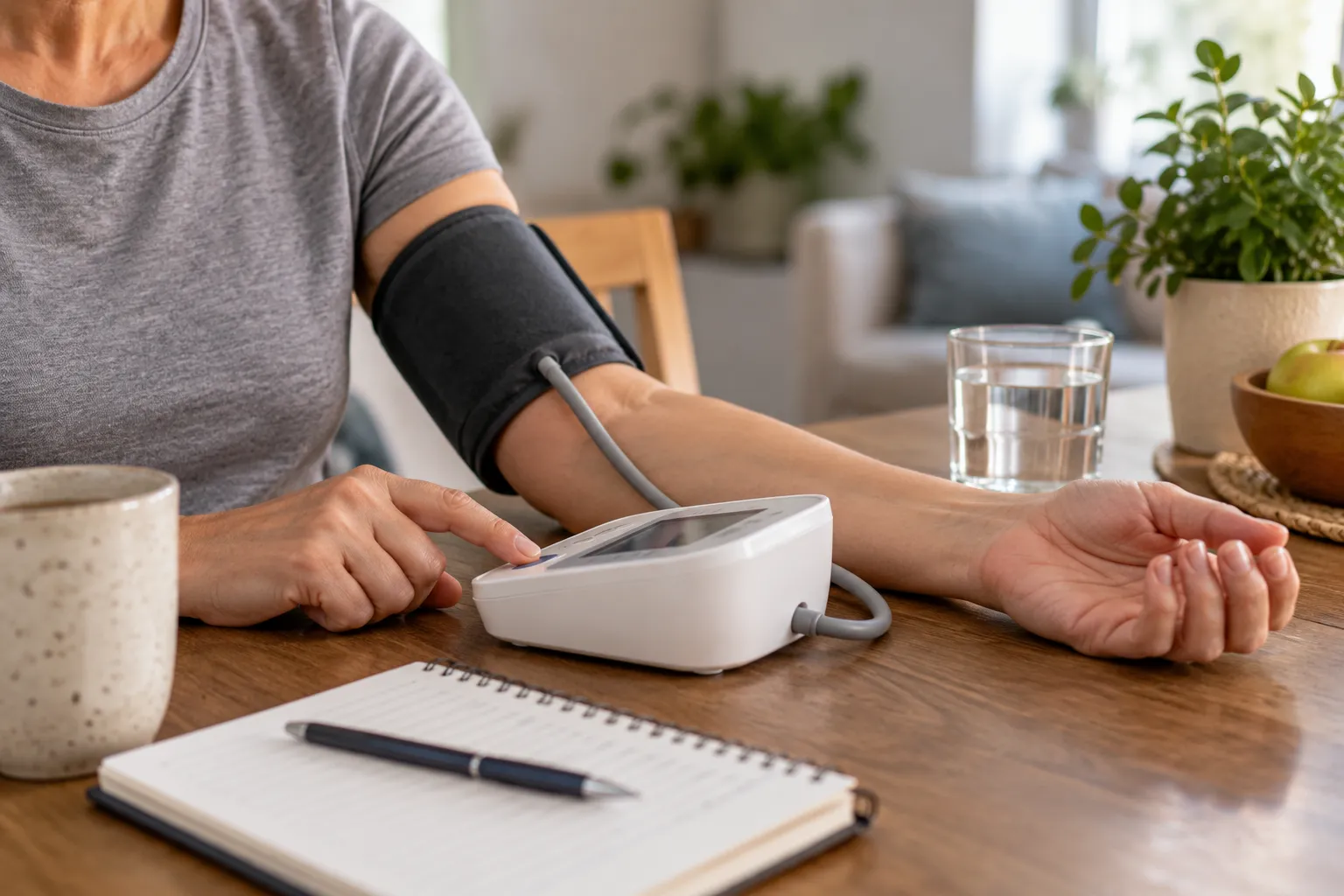

Blood pressure monitoring at home can be a practical way to keep track of your numbers between healthcare visits. The process is simple, but small details such as your sitting position, cuff placement and timing can influence the result.
High blood pressure often does not cause noticeable symptoms. Regular measurements can therefore provide information that you might not get from the way you feel. The CDC recommends discussing home monitoring with your healthcare team, particularly when blood pressure needs regular attention. CDC
Why Blood Pressure Monitoring Is Useful for Heart Health
Blood pressure describes the force of blood against the walls of your arteries. When it stays too high, it can contribute to cardiovascular problems, including heart disease and stroke. CDC
Home readings can show how your blood pressure behaves outside a medical office. Keeping several measurements also gives your healthcare professional more information than a single number taken on one occasion.
The American Heart Association recommends home monitoring for people with high blood pressure and notes that it can help healthcare professionals assess whether treatment is working. www.heart.org
1. Blood Pressure Monitoring Begins With a Suitable Monitor
For home use, the American Heart Association recommends an automatic upper-arm cuff monitor. Wrist and finger devices are generally less reliable. www.heart.org
The cuff must also match the size of your upper arm. An incorrect cuff can affect the reading, so check the manufacturer’s sizing information before purchasing a device.
If possible, take your monitor to a medical appointment. A healthcare professional can check whether you are positioning the cuff correctly and whether your device is producing readings comparable with the equipment used in the office. www.heart.org
2. Give Yourself a Few Minutes Before Measuring
Do not take your blood pressure immediately after rushing around, exercising or drinking coffee.
For a more consistent reading, avoid exercise, smoking and caffeinated drinks for about 30 minutes beforehand. Empty your bladder, then sit quietly for at least five minutes. www.heart.org
During this waiting period, try not to talk or use your phone.
The aim is to begin the measurement while your body is settled rather than immediately after an activity that could temporarily change your numbers.
3. Your Sitting Position Can Affect the Result
Set up a firm chair where you can sit comfortably with your back supported.
Place both feet on the floor and keep your legs uncrossed. Rest the arm with the cuff on a flat surface so that the middle of the cuff sits around heart level. CDC
The cuff should be wrapped around bare skin, not over a sleeve. Its lower edge should sit just above the elbow bend.
Once everything is positioned, relax your arm and remain quiet while the device is working.
4. Take Two Measurements Instead of One
A single result gives you information about that particular moment.
For home monitoring, the CDC recommends taking at least two readings, separated by one or two minutes. The American Heart Association similarly recommends two measurements about one minute apart. CDC
Record both numbers rather than remembering only the higher or lower one.
If your monitor stores readings automatically, you can use that function. Otherwise, a simple notebook or digital record is enough.
Keep a Simple Record of Your Numbers
A blood pressure log does not need to be complicated.
Write down:
- the date
- the time
- the first reading
- the second reading
- anything unusual that could have affected the measurement
Try to follow the schedule recommended by your healthcare professional. Taking readings at similar times can make changes easier to interpret. The CDC recommends discussing how often you should measure your blood pressure with your healthcare team. CDC
5. Blood Pressure Monitoring Is More Useful When It Is Consistent
Checking your blood pressure once and then forgetting about it provides limited information.
A series of properly taken measurements can show whether your numbers are generally stable or whether they frequently move outside your usual range. The American Heart Association describes an individual reading as a snapshot, while a record over time gives a broader picture. www.heart.org
That is why consistency matters more than constantly checking your blood pressure at random times.
If your healthcare professional has given you a specific monitoring schedule, follow that plan.
What Should You Do With a Higher Reading?

A single higher number does not necessarily mean that something is seriously wrong.
If your result is higher than usual, sit quietly and repeat the measurement. Keep both results in your record and discuss repeated elevated readings with your healthcare professional. The American Heart Association advises repeating an unexpectedly high reading rather than reacting to one measurement alone. www.heart.org
However, extremely high readings require prompt attention.
If your blood pressure is above 180/120 mm Hg, wait at least one minute and measure again. If it remains that high, contact a healthcare professional immediately. If you also have symptoms such as chest pain, shortness of breath, weakness, numbness, vision changes or difficulty speaking, seek emergency medical care. www.heart.org
Do Not Change Medication Based on Home Readings
A home monitor provides information, but it does not decide your treatment.
If you take medication for high blood pressure, do not stop or change it because of one home reading unless your healthcare professional tells you to do so. The American Heart Association specifically advises continuing to work with your healthcare team while using home monitoring. www.heart.org
Bring your record to appointments when appropriate. It can help your healthcare professional see how your numbers behave outside the clinic.
Blood Pressure Monitoring and Other Heart-Healthy Habits
Monitoring your numbers is only one part of cardiovascular care.
Regular movement, nutritious meals, adequate sleep and other everyday habits can also support overall heart health. Our exercise guide provides practical ideas for regular movement, while our healthy recipes section offers simple meal inspiration.
You can also review our existing heart health article for additional everyday habits.
A Simple Home Measurement Routine
Once you know the correct technique, the process can become straightforward.
Prepare: avoid caffeine, smoking and exercise beforehand.
Settle: empty your bladder and sit quietly for at least five minutes.
Position: support your back and feet and keep the cuffed arm at heart level.
Measure: take two readings about one minute apart.
Record: save both results.
Review: share your record with your healthcare professional when appropriate.
Following the same sequence each time can make home measurements easier to compare.
Frequently Asked Questions About Blood Pressure Monitoring
How often should I check my blood pressure?
There is no single schedule that applies to everyone. Your healthcare professional can tell you how frequently to measure it based on your health and treatment. CDC
Can I measure my blood pressure over my shirt?
For the most reliable result, the cuff should sit directly against the skin of the upper arm rather than over clothing. www.heart.org
Can I talk while the monitor is measuring?
It is better to remain quiet and still. Talking or moving can interfere with the measurement. CDC
Should I use a wrist monitor?
The American Heart Association recommends an automatic upper-arm cuff monitor for home measurements and does not recommend wrist or finger monitors because they tend to be less reliable. www.heart.org
What if my two readings are different?
Blood pressure naturally varies. Take the readings according to the recommended procedure and record them rather than choosing only the number you prefer. If you repeatedly notice unusual differences or concerning readings, discuss them with your healthcare professional.
Final Thoughts on Blood Pressure Monitoring
Blood pressure monitoring can become a simple part of a heart-health routine when you use the right equipment and follow the same technique each time.
Sit correctly, allow yourself to rest beforehand, place the cuff properly, take more than one reading and keep a record. These small details can make your home measurements more useful when you discuss them with your healthcare professional.
Disclaimer
This article is for informational and educational purposes only. It does not provide medical advice, diagnosis or treatment. Blood pressure targets and monitoring schedules vary between individuals. If you have repeated abnormal readings, take blood pressure medication, or develop concerning symptoms, speak with a qualified healthcare professional.