


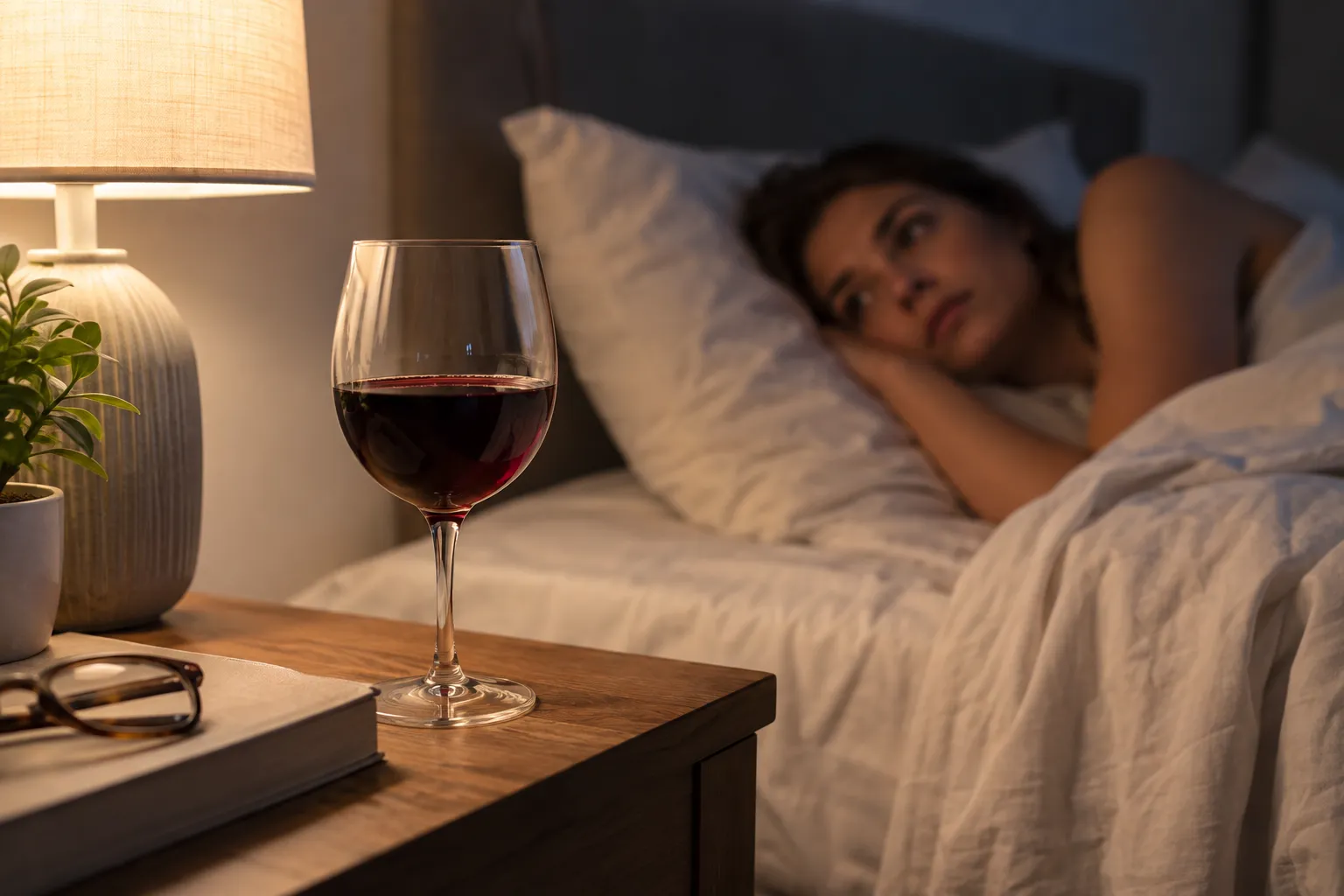

Alcohol and sleep are closely connected because drinking before bed can change how your body moves through the different stages of sleep. Although alcohol may make some people feel sleepy at first, that does not necessarily mean the resulting sleep will be more restorative. NHLBI, NIH
This is important because good sleep is not only about falling asleep quickly. Quality sleep should also be reasonably continuous and refreshing. The CDC notes that sleep quality includes how well you sleep, not simply the number of hours you spend in bed. CDC
Why Alcohol and Sleep Do Not Always Work Well Together
Alcohol has a sedative effect, which can make falling asleep seem easier. However, research shows that it can alter normal sleep patterns later during the night. A 2025 systematic review and meta-analysis found that even lower doses of alcohol can reduce REM sleep, while higher amounts can produce additional changes in sleep architecture. PubMed
This creates an important distinction: feeling sleepy after a drink is not the same as getting better-quality sleep.
1. Alcohol and Sleep Can Change the Second Half of the Night
The effect of alcohol is not necessarily the same throughout the entire night.
According to the National Heart, Lung, and Blood Institute, alcohol may make it easier to fall asleep but can lead to lighter sleep and make nighttime waking more likely. NHLBI, NIH
You may therefore fall asleep quickly and still wake up several times later.
This can be particularly frustrating because the first part of the night may seem normal while the second part feels restless.
2. Alcohol and Sleep Can Affect REM Sleep
REM sleep is one of the normal stages of the sleep cycle. It is associated with dreaming and plays an important role in normal brain function.
A recent systematic review found that alcohol can delay the onset of REM sleep and reduce the amount of REM sleep, with disruption appearing even after relatively low doses. PubMed
The exact effect can vary according to factors such as the amount consumed and when it was consumed.
That is one reason researchers do not consider alcohol a reliable way to improve sleep.
What Happens When You Drink Close to Bedtime?
Imagine having a drink shortly before going to bed.
You may feel relaxed and become sleepy faster. However, alcohol continues to affect your body after you fall asleep. As the night progresses, the pattern of sleep can become less stable.
The NHLBI specifically recommends avoiding alcohol close to bedtime as part of healthy sleep habits. NHLBI, NIH
If you notice that you fall asleep quickly after drinking but wake up during the night or feel less refreshed in the morning, the timing of alcohol may be worth considering.
3. Alcohol and Sleep Can Make Nighttime Waking More Noticeable
Frequent waking can make a normal night feel much less restorative.
Alcohol has been associated with sleep fragmentation and more disrupted sleep. Research also suggests that alcohol can affect breathing during sleep, particularly in people who already have sleep-related breathing problems. PubMed Central (PMC)
If you regularly snore heavily, wake up gasping, or feel excessively sleepy during the day, do not assume alcohol is the only explanation. These symptoms deserve discussion with a healthcare professional.
Does One Drink Always Ruin Your Sleep?
Not necessarily.
The effect depends on several factors, including the amount of alcohol, timing, individual differences and other aspects of sleep health. The recent systematic review found a dose-related pattern for some changes, but not every aspect of sleep was affected in the same way across all studies. PubMed
That means it is better to avoid absolute claims such as “one drink always destroys sleep.”
Instead, pay attention to your own pattern.
If you consistently notice poorer sleep after drinking in the evening, that is useful information about how your body responds.
4. Alcohol and Sleep Should Be Considered Together With Your Evening Routine
Alcohol is only one part of what happens before bedtime.
Late meals, caffeine, bright light, stress and irregular sleep schedules can also interfere with sleep. The NHLBI recommends avoiding alcohol close to bedtime alongside other healthy sleep habits such as maintaining a consistent schedule and keeping the bedroom quiet, cool and dark. NHLBI, NIH
You can also support your evening routine with simple self-care habits.
If stress is keeping you awake, our guide to managing stress offers additional ideas.
What Can You Drink Instead in the Evening?
If you normally associate an evening drink with relaxation, changing the routine may be easier if you replace the habit rather than simply remove it.
Water, sparkling water or another non-alcoholic drink can become part of your evening routine. Our healthy drinks guide has more ideas.
The important point is not to turn the replacement drink into another source of excessive sugar or caffeine.
5. Alcohol and Sleep Can Matter for Next-Day Recovery
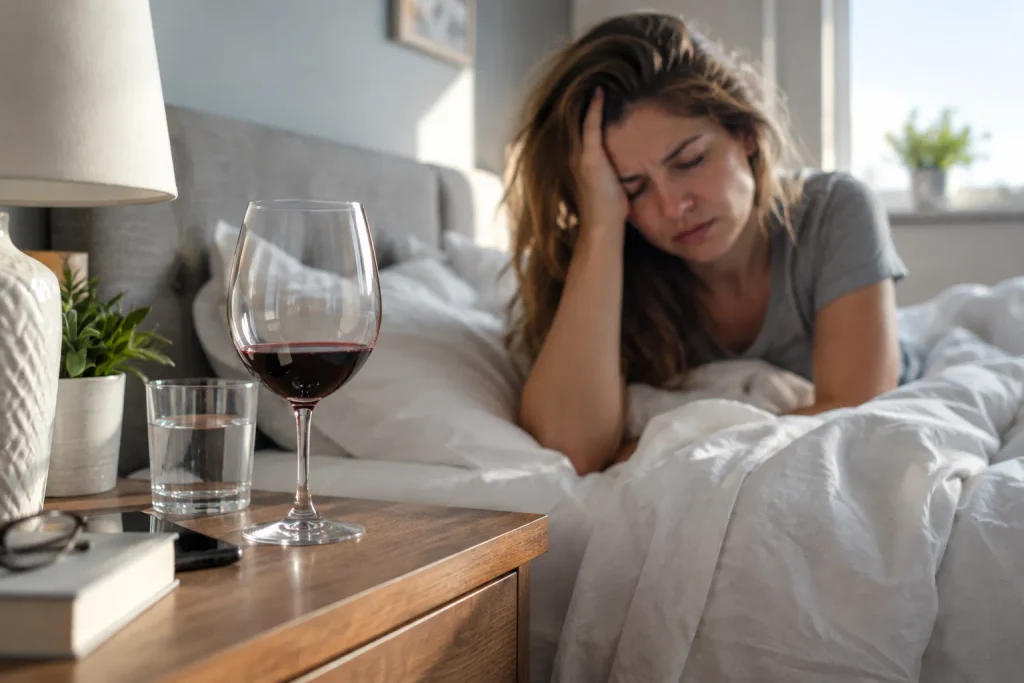
Poor-quality sleep can affect how you feel the following day.
The CDC notes that good-quality sleep supports attention, mood, daily functioning and overall health. CDC
If drinking in the evening repeatedly leaves you tired the next morning, the problem may not be the number of hours you spent in bed. The quality and continuity of that sleep also matter.
This can be especially relevant if you exercise regularly. Good recovery depends on more than physical activity alone, so your exercise routine should be supported by adequate rest.
A Simple Experiment With Your Evening Routine
You do not need complicated tracking.
For a short period, notice three things:
What time you stopped drinking alcohol.
What time you went to bed.
How you felt the following morning.
You can also note whether you woke during the night.
This is not a medical test. It is simply a way to notice whether there is a repeated connection between your evening habits and your sleep.
What If You Use Alcohol to Help You Fall Asleep?
If you regularly rely on alcohol because you have difficulty falling asleep, it is worth discussing the problem with a healthcare professional rather than increasing the amount you drink.
Alcohol may temporarily make you sleepy, but it is not a recommended treatment for insomnia. The NHLBI advises avoiding alcohol close to bedtime and recommends discussing persistent sleep problems with a healthcare professional. NHLBI, NIH
If sleep difficulties continue, the underlying cause deserves attention.
6. Alcohol and Sleep Are Only One Part of Better Recovery
Improving sleep does not require changing everything at once.
Start by looking at the habit that affects your evenings most consistently. For some people, that may be late alcohol use. For others, it may be an irregular bedtime, caffeine late in the day or too much screen exposure.
A practical evening routine can also include movement during the day, balanced meals and time to relax before bed.
The goal is to create conditions that allow sleep to happen naturally rather than depending on alcohol to make you feel sleepy.
Frequently Asked Questions About Alcohol and Sleep
Does alcohol help you fall asleep?
It can make some people feel sleepy and may shorten the time needed to fall asleep. However, research shows that alcohol can disrupt sleep later in the night, so falling asleep faster does not necessarily mean better sleep. NHLBI, NIH
How long before bed should I avoid alcohol?
There is no single interval that guarantees the same effect for everyone. The NHLBI recommends avoiding alcohol close to bedtime, while CDC/NIOSH guidance advises finishing alcohol several hours before planned sleep if you choose to drink. NHLBI, NIH
Can alcohol affect REM sleep?
Yes. A 2025 systematic review found that alcohol can delay REM sleep and reduce its duration, with effects observed even at lower doses. PubMed
Why do I wake up during the night after drinking?
Alcohol can make sleep lighter and more fragmented as the night progresses. However, repeated nighttime waking can have many causes, so persistent problems should be discussed with a healthcare professional. NHLBI, NIH
Final Thoughts on Alcohol and Sleep
Alcohol and sleep may seem compatible because alcohol can initially make you feel relaxed and sleepy. However, research shows that drinking can alter sleep architecture and make sleep less continuous, particularly later in the night. PubMed
If you want better recovery, consider moving alcohol away from your bedtime routine or avoiding it in the evening. Combine that change with other habits that support sleep, such as a consistent schedule, a comfortable bedroom and a relaxing wind-down period.
Disclaimer
This article is for informational and educational purposes only. It does not provide medical advice, diagnosis or treatment. If you regularly have difficulty sleeping, wake frequently during the night, snore heavily, experience breathing problems during sleep or rely on alcohol to fall asleep, speak with a qualified healthcare professional.